
Exprimer les attitudes (jugements/appréciations)

L’apprenant devrait être capable d’exprimer son opinion
Adverbials and Tenses
Identify adverbials in given passages;
Make sentences with adverbials;
Identify the different tenses in the passage;
Make correct sentences with tenses.
Reading for Summary
Identify topic sentences from paragraphs/passages.;
Identify key ideas from different paragraphs; and
Identify words and expressions that redirect attention to the main point.
Reading for Speed
Read, using the right speed; and
Give correct answers to questions on selected passages.
More on Figures of Speech: Irony and Hyperbole
Identifying figures of speech-irony and hyperbole in sentences;
Use of irony and hyperbole correctly in sentences
Drama: Kinds and Features
Read and dramatize a given play;
Identify different kinds of drama;
Identify the features of plays;
Identify essential props/costumes in a play;
Write a simple play.
Poetry (Written).
Read a selection of poems;
Explain meanings of selected poems
Identify language of poetry;
Write simple poems.
Popular Myths/ Legends
Identify the features of popular myths and legends;
Explain the theme of myths / legends;
Identify the moral lessons to be learnt from popular myths/legends; and
Narrate any popular myth/legend.
Nigerian and African Folktales
Identify features of Nigerian and African Folktales;
Retell the folktales and explain the theme;
Identify the moral lessons to be learnt from the folktales; and
Narrate Nigerian and African folktales.
Direct and Indirect Speech
Read direct speech sentences; and
Change such sentences into indirect speech, both orally and in writing.
Active and Passive Verbs
Identify active and passive verbs;
List active and passive verbs;
Make sentences with active and passive verbs.
Parts of Speech: Nouns, Pronouns, Verbs and Adjectives
Identify the features of nouns, pronouns, verbs and adjectives in given passages;
list the functions of nouns, pronouns, verbs and adjectives in the passages;
make sentences with nouns, pronouns, verbs and adjectives.
Revision of Sounds: Vowels and Consonants
Identify all vowels;
Identify all consonants;
Orally produce all vowels; and
Orally produce all consonants.
Speeches: Question Tags
Identify different speeches with particular reference to questions and their tags;
Use the appropriate stress and intonation in questions and their tags.
Speeches (Intonation, Stress and Rhythm)
Identify intonation patterns in statements, questions and commands;
Make statements, ask questions and give commands using different intonation patterns;
Identify the correct points of pauses in different sentences;
Identify and describe appropriately the rhythm in poems listened to.
Oral Comprehension
Identify and explain the main ideas from materials presented;
Accept or reject ideas presented based on prior experiences;
Identify writer‘s moods and intentions; and
Identify possible interpretations based on what they have listened to.
Letter Writing: Informal and Formal
The types and formats of letters; and
Different types of letters to suit different situations.
Composition Writing: Expository
Various types of composition writing;
The elements of composition; and
Different types of composition.
Letter M Activity

This is a fun activity to trace the letter M and find objects that start with M
Learn Letter M The Alphabet with Akili Cartoons for Preschoolers
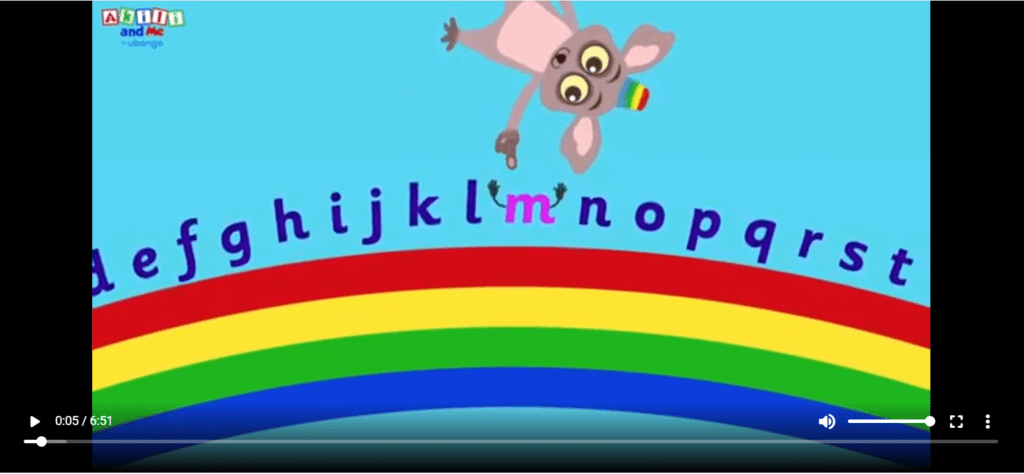
In this lesson, learners will learn the letter M in a fun way with Akili Cartoons