
Nervous Co-ordination

Locate the position of the CNS (brain and spinal cord) in a dissected vertebrate.
Describe the structure of the brain and explain the functions of its various organs.
Describe the spinal cord and explain its function
State the structural difference between the brain and spinal cord
Identify the PNS (Peripheral Nervous System) and describe its function.
Describe typical neuron
Group neurons according to functions as found in vertebrates and explain their functions.
Explain the process of impulse transmission.
Distinguish between a reflex action and a conditioned reflex action giving a few examples of each
Nervous Co-ordination
Locate the position of the CNS (brain and spinal cord) in a dissected vertebrate.
Describe the structure of the brain and explain the functions of its various organs.
Describe the spinal cord and explain its function
State the structural difference between the brain and spinal cord
Identify the PNS (Peripheral Nervous System) and describe its function.
Describe typical neuron
Group neurons according to functions as found in vertebrates and explain their functions.
Explain the process of impulse transmission.
Distinguish between a reflex action and a conditioned reflex action giving a few examples of each
Regulation of Internal Environment (i)

List the main organs and substances involved in homeostasis (control mechanism).
Describe the structure and functions of these organs: kidney and liver.
Name some kidney diseases and explain their symptoms and effects.
Name some liver diseases and briefly explain their symptoms and effects.
Discuss the remedy for unhealthy conditions kidney and the liver.
Explain what hormones are
List some endocrine glands, their positions in the body and their functions.
State the effect of overproduction and underproduction of these hormones.
Identify the mammalian skin under the microscope.
Draw and label the main structures of the skin.
State the functions of the mammalian skin.
State a few ways to care for the skin.
Regulation of Internal Environment (i)
List the main organs and substances involved in homeostasis (control mechanism).
Describe the structure and functions of these organs: kidney and liver.
Name some kidney diseases and explain their symptoms and effects.
Name some liver diseases and briefly explain their symptoms and effects.
Discuss the remedy for unhealthy conditions kidney and the liver.
Explain what hormones are
List some endocrine glands, their positions in the body and their functions.
State the effect of overproduction and underproduction of these hormones.
Identify the mammalian skin under the microscope.
Draw and label the main structures of the skin.
State the functions of the mammalian skin.
State a few ways to care for the skin.
Regulation of Internal Environment (i)

List the main organs and substances involved in homeostasis (control mechanism).
Describe the structure and functions of these organs: kidney and liver.
Name some kidney diseases and explain their symptoms and effects.
Name some liver diseases and briefly explain their symptoms and effects.
Discuss the remedy for unhealthy conditions kidney and the liver.
Explain what hormones are
List some endocrine glands, their positions in the body and their functions.
State the effect of overproduction and underproduction of these hormones.
Identify the mammalian skin under the microscope.
Draw and label the main structures of the skin.
State the functions of the mammalian skin.
State a few ways to care for the skin.
Regulation of Internal Environment (i)
List the main organs and substances involved in homeostasis (control mechanism).
Describe the structure and functions of these organs: kidney and liver.
Name some kidney diseases and explain their symptoms and effects.
Name some liver diseases and briefly explain their symptoms and effects.
Discuss the remedy for unhealthy conditions kidney and the liver.
Explain what hormones are
List some endocrine glands, their positions in the body and their functions.
State the effect of overproduction and underproduction of these hormones.
Identify the mammalian skin under the microscope.
Draw and label the main structures of the skin.
State the functions of the mammalian skin.
State a few ways to care for the skin.
Sequence and Series

Meaning and types of sequence
Solving problem on arithmetic progress.
Solving problems on geometric progression
Data Presentation
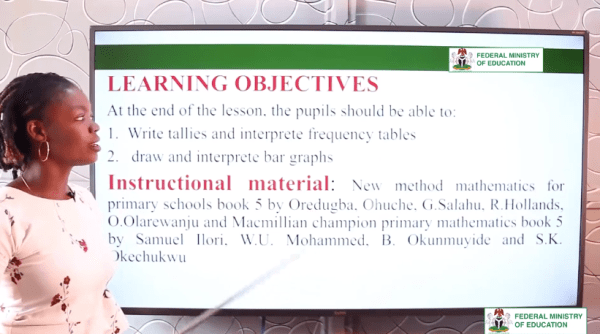
At the end of the lesson the student should be able to understand data presentation.
Parts of a Circle
At the end of the lesson the student should be able to understand part of a circle.
Three-Dimensional Shapes
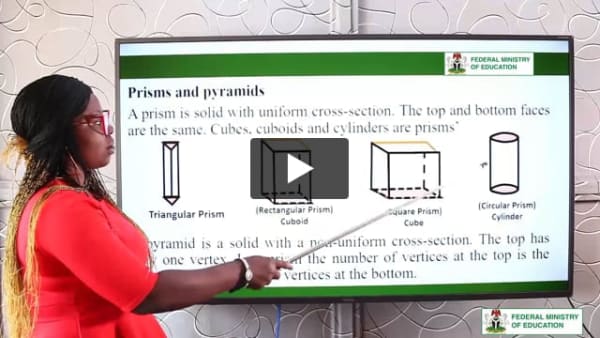
At the end of the lesson the student should be able to understand three- dimensional shapes.
Plane Shapes (2)
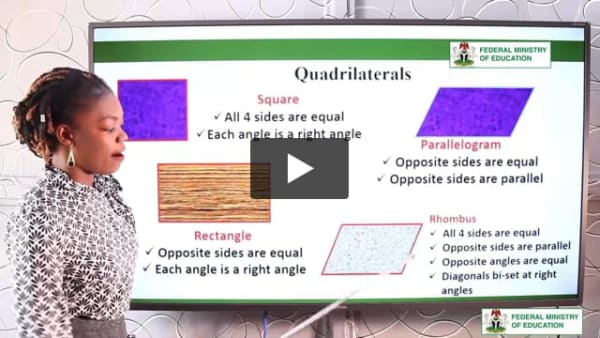
At the end of the lesson the student should be able to understand plane shapes.
Plane Shapes
At the end of the lesson the student should be able to understand plane shapes.
Structure of the Earth
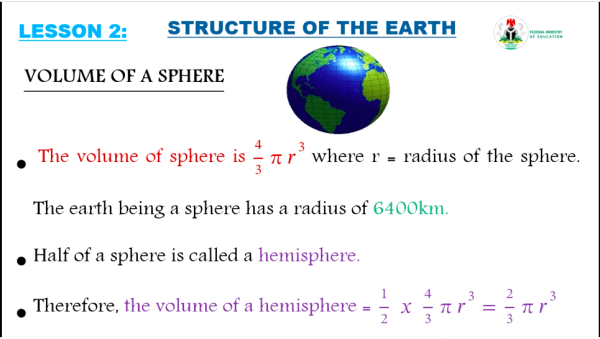
At the end of the lesson the student should be able to comprehend the structure of the earth.
Structure of the Earth
At the end of the lesson the student should be able to comprehend the structure of the earth.
Capacity
At the end of the lesson the student should be able to comprehend the concept capacity.
Volume
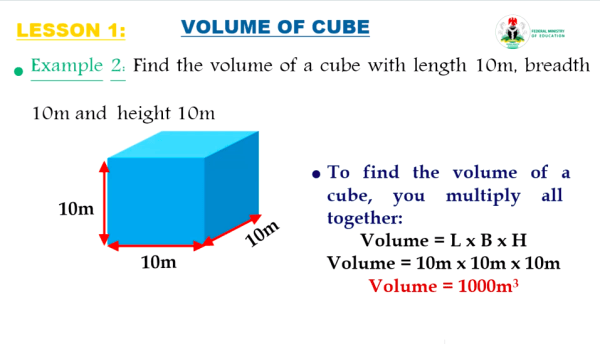
At the end of the lesson the student should be able to comprehend the concept volume.
Volume
At the end of the lesson the student should be able to comprehend the concept volume.
Area
At the end of the lesson the student should be able to comprehend the concept area.
Temperature
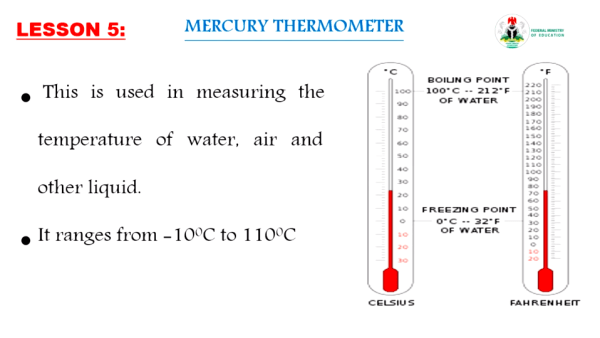
At the end of the lesson the student should be able to comprehend the concept temperature.
Temperature
At the end of the lesson the student should be able to comprehend the concept temperature.