
Enterpreneaurship in electronics
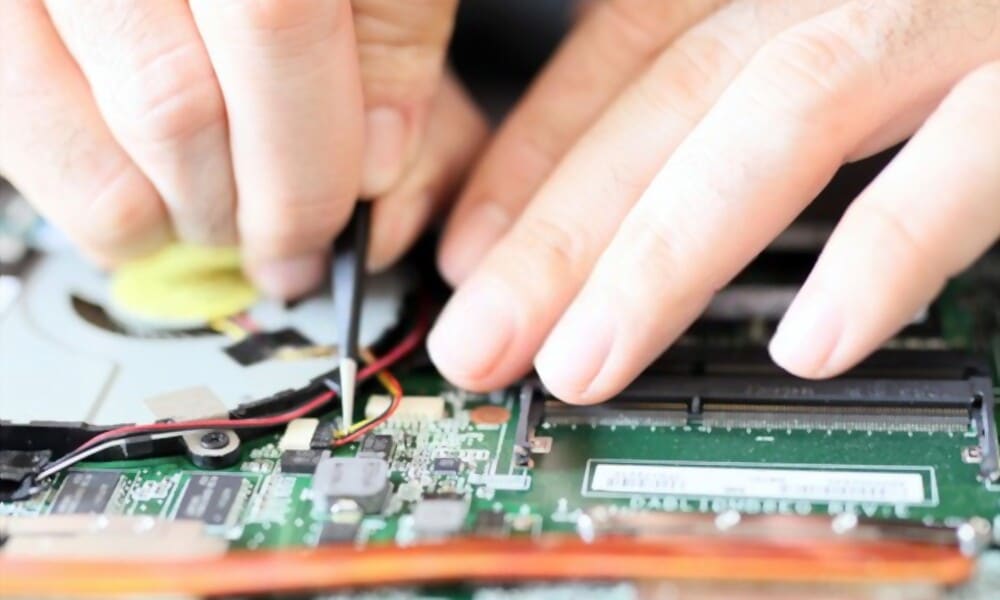
Mention possible business opportunities in electronics.
Discuss sources of fund for business take off.
Explain budgeting.
Explain business management
Servo-mechanism
Explain the operations of servo- system.
Explain the applications of a servo-system.
Control circuits
Explain the concept of control circuits.
State types of control circuits.
Explain principles of operation of control circuits.
Communication System
At the end of this lesson, the students should be able to understand Communication System
Information and communication technology (ICT)
Explain the operations of telephone.
Explain the operations of internet system.
Explain the operations of Global System Mobile (GSM) phones.
Satellite
Explain concept of satellite communication.
Explain principles of transmission and reception system.
Explain the principles of operation of :
– Dish / LNB
– Frequency changer
– Video crystal decoder
– MPU
– Audio section
Explain types of satellite dish and LBN
Logic gate
Explain logic gates.
State different logic gates, OR, NOR, AND and NAND.
Construct the TRUTH table for each of the above mentioned gates.
Number system
Identify different number systems
Explain the basis of formation of different number systems.
Perform some additions and subtractions in binary numbers.
Convert from one base number to another
Feedback circuits
Explain the principles of feedback circuits.
List the types of feedback amplifier
Explain the principles of oscillator.
List types of oscillator
State the application of oscillator
Amplifier
Define amplifier
List the classes of amplifier.
State the applications of amplifier
Acoustic transducers
Explain types of acoustic transducers.
State the applications of acoustic transducers
Transducers and sensors
Explain the meaning of the following:
i. transducer
ii. sensor
Discuss the principles of operation of a transducer.
Eplain the principles of operation of a sensor.
State types of transducers and sensors.
Explain the uses of transducers and sensors
Measuring instruments
Explain the meaning of measuring instrument.
Differentiate between analogue and digital measuring instruments.
State different types of measuring instrument and their respective uses.
Hand tools
Explain the meaning of hand tools.
State types and uses of hand tools.
Television receiver
Explain stages of a Television receiver using block diagram.
Radio transmission and reception
Describe the principle of radio transmission and reception (AM and FM).
Explain each stage of a radio receiver ( AM and FM).
State the relative advantage of FM over AM.
Demonstrate how to detect faults in a radio receiver.
Power supply unit
Explain Rectification
Explain the differences between half wave and full wave rectification.
Explain how a.c is converted to d.c. by the use of rectifiers.
State the meaning of voltage regulation.
Explain the operation of voltage regulators
Integrated Circuits (IC) and microprocessors
Explain the concept of Integrated circuit (IC).
State the advantages and disadvantages of IC.
State the applications of IC.
Explain the concept of microprocessor
Explain the following terms as related to microprocessor: RAM, ROM, and EPROM.
Mention applications of microprocessor.
Transistors
Explain the concept of a transistor
Explain biasing of a transistor.
Explain bipolar transistor circuits
Explain types of transistors and symbols.
Explain applications of transistors
Power in AC circuits
Explain power and power triangle.
Explain power factor and power factor correction.
State advantages and disadvantages of power factor correction.
Calculate power factor in a given AC circuit.
Explain Q-factor and bandwidth.