
Computer Aided Design (CAD)

At the end of this lesson, the students should be able to understand Computer-Aided Design (CAD)
Details of Parts of Building

Identifying parts of a building.
Drawing details of parts of a building.
Building design and working Drawing
Designing buildings with one floor to meet given specifications.
Preparing working drawings from sketches.
Orthographic Projection
Explaining orthographic projection and its principles.
Types of orthographic projections
Symbols of first and third angle orthographic projection.
Orthographic views of objects.
Isometric projection from given orthographic views.
Planes and Views in Space
Explaining the terms in the planes and views in space
Placing line in the first quadrant and project into the vertical and horizontal planes.
True Lengrhs and Angles of a line in space
Determining the true lengths and angles of a line in space.
Traces of a point and line in space
Describing a point and a line in space.
Drawing projection of a line in space.
Auxiliary views of Geometrical Solids
The purpose of drawing auxiliary views.
Drawing auxiliary views of simple shaped blocks and cut geometrical solids with selected tools.
Drawing auxiliary elevations and plans of cut geometrical solids.
Perspective Drawing

The uses of terms in perspective drawings.
Perspective drawings of simple objects
True Shapes
Determining the true shapes of truncated geometrical solids
Building models of truncated solids showing the true shapes
Link Mechanisms

Interpreting different link mechanisms.
Ploting the loci of points on different link mechanisms.
Special Curves
Explaining the locus definitions and practical applications of selected special curves.
Construction of special curves using different methods
Maintenance of computer 1
Students should be able to explain and carry out basic computer maintenance procedures.
Presentation package

Explain the meaning of Presentation package
Mention the uses of Presentation package
Use the Presentation package to solve problems
Internet 1

Define the internet
Identify internet browser
Mention the benefits of internet
Explain internet security
Mention the abuses of internet
Entity relationship model
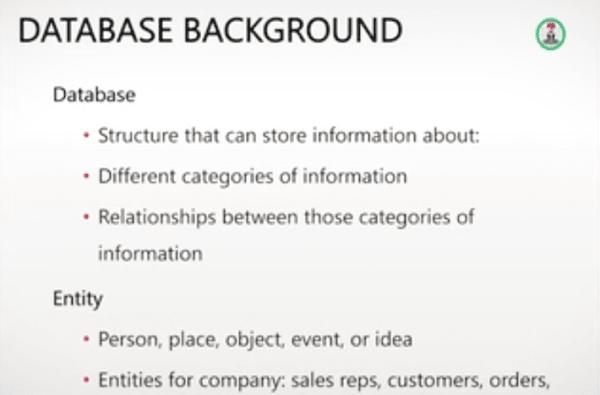
Define entities, attributes, and relationship.
Identify objects around an entity sets and the relationship that exist between them.
Normal forms
Explain the term normal form
Give examples of tables in normal form
Normal forms
Explain the term normal form
Give examples of tables in normal form
Data modelling
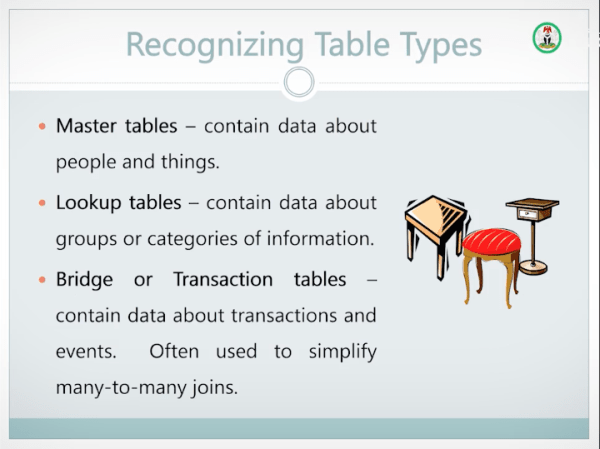
Create simple data model.
Explain the significance of data model.
Give examples of standard data model.
Types of data models
Explain the term data model.
State the types of data models.