
Managing violence in schools : Handbook for Schools and Learning Centres
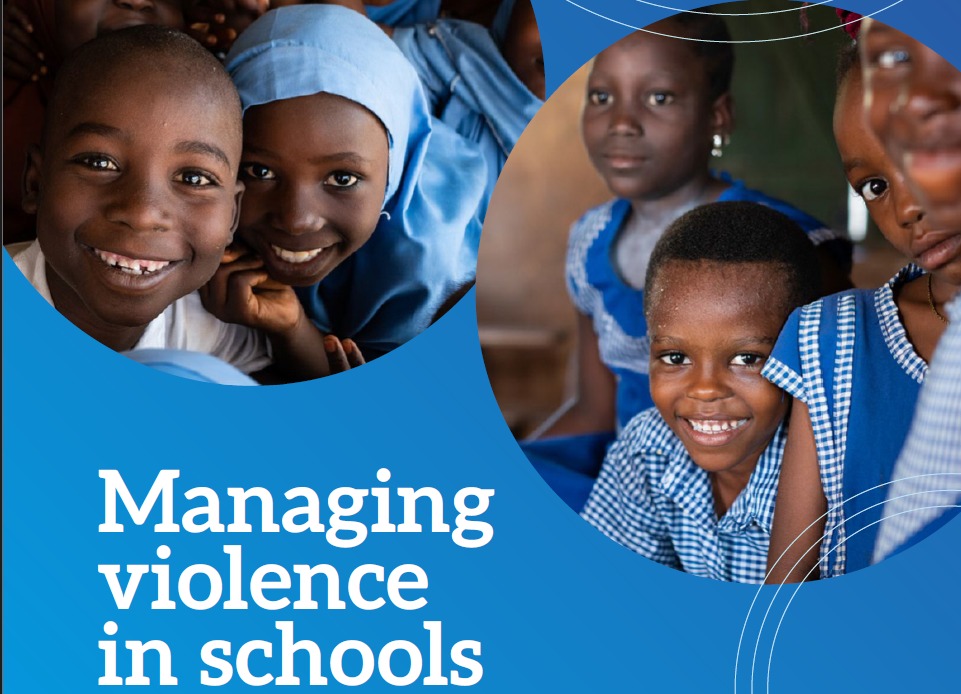
This handbook equips teachers with practical strategies to prevent and respond to school-based violence. It covers corporal punishment, bullying, sexual and gender-based violence, and cyberbullying, highlighting their causes, effects, and warning signs. Teachers will learn positive discipline approaches, safeguarding practices, and reporting mechanisms. The resource emphasises creating safe, inclusive learning environments where every child feels protected, respected and able to thrive.
Minimum Standards for Safe Schools
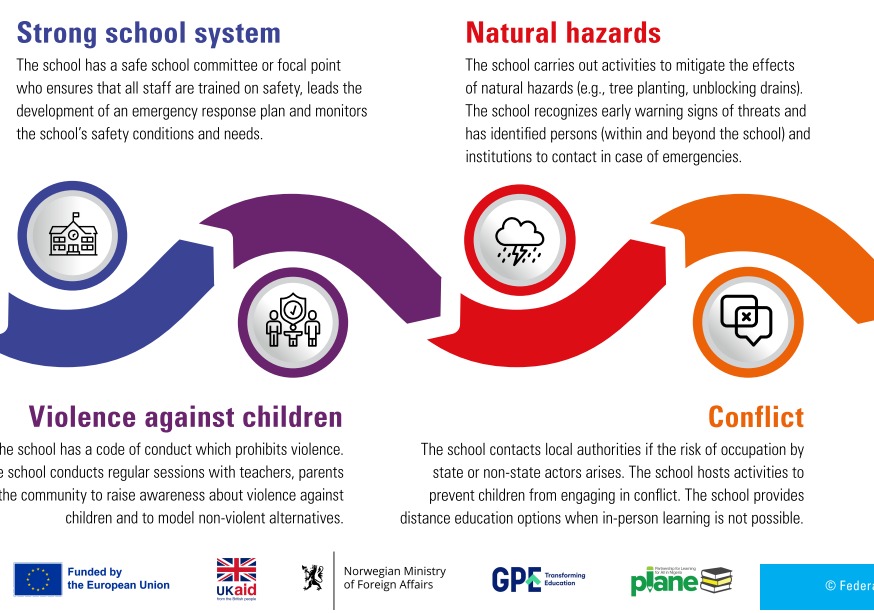
This poster outlines the minimum standards for safe, inclusive, and supportive learning environments in Nigerian schools. It highlights teachers’ and schools’ responsibilities in safeguarding children, promoting positive discipline, preventing violence, and ensuring equal access to quality education. The resource serves as a practical guide for educators to uphold child protection and foster safe schools where every learner can thrive.
Climate Change Education : Handbook for Schools in Nigeria
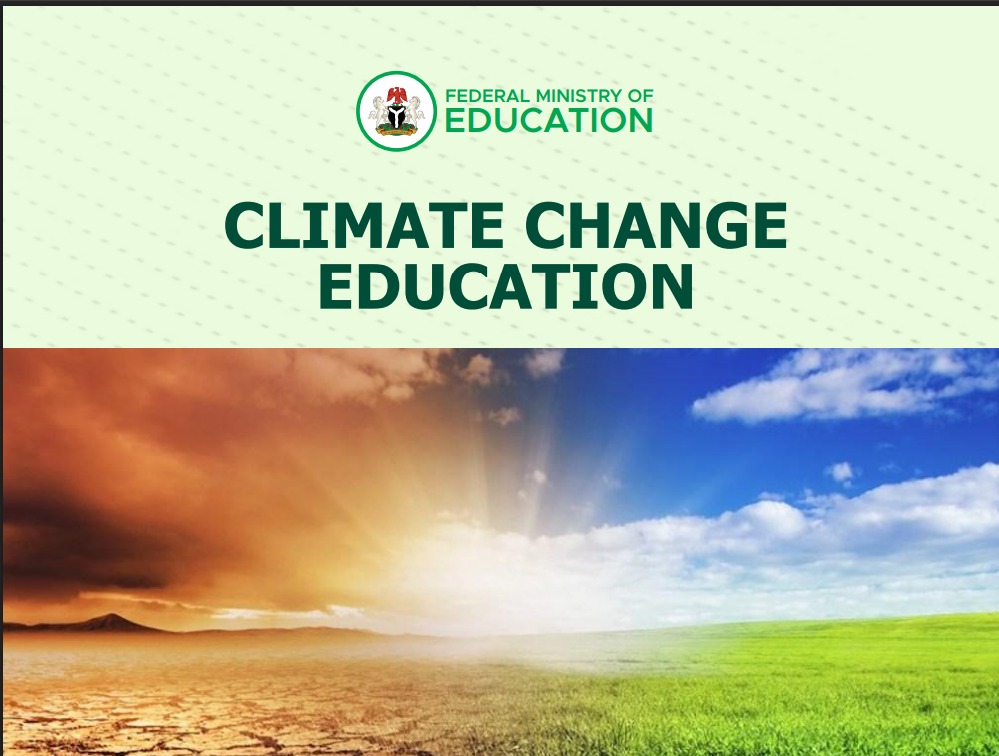
This handbook introduces teachers to climate change concepts, impacts and classroom strategies for building learner awareness and resilience. It explains causes and effects, highlights Nigeria’s vulnerabilities and provides practical activities to integrate climate education across subjects. The resource equips teachers to promote sustainable practices, encourage critical thinking, and empower learners to take informed action in their communities.
STEP

STEP (Strengthening Teachers’ English Proficiency) is a comprehensive course designed to enhance the English language skills of teachers, with a strong focus on classroom communication and effective teaching strategies. Offered as a trainer-supported or self-study programme, STEP equips educators with the tools they need to foster a positive learning environment and deliver high-quality instruction in English. The course focuses on essential classroom English skills, including giving clear instructions, managing classroom interactions, and explaining concepts effectively. In addition to language development, it introduces practical teaching methodologies that encourage student engagement and improve learning outcomes. STEP is suitable for teachers across diverse educational settings—from primary to secondary schools—and is especially valuable for those seeking to improve both their English proficiency and pedagogical skills. Whether in urban or rural environments, participants benefit from structured, flexible learning that supports continuous professional development. By the end of the course, teachers will be better equipped to use English confidently and accurately in their classrooms, enhancing student understanding and contributing to improved educational quality. STEP helps teachers become more effective communicators, reflective practitioners, and professional role models who can positively impact learners’ academic journeys.
STRIDE
Digital Literacy for Educators is a practical course designed to equip pre-service and in-service teachers in Nigerian Colleges of Education with essential ICT skills for effective instructional delivery. In response to the increasing integration of digital technologies in education, this course strengthens teachers’ capacity to use digital tools and platforms— particularly in low-resource contexts. It covers basic technology skills such as word processing, creating slideshows, searching online, and using spreadsheets, as well as strategies for online teaching, assessment, and learner engagement.Participants will learn how to plan and deliver live lessons using platforms like WhatsApp, explore synchronous and asynchronous teaching methods, promote gender-sensitive and inclusive practices, and track learner progress with parental involvement. The course encourages creativity, collaboration, and the development of digital teaching materials, fostering a culture of continuous professional learning. Ultimately, it prepares educators to confidently integrate technology into their teaching, in line with the National Policy on Education and the National Digital Literacy Framework
Owo sise Ni Ile Yoruba
Akekoo yoo le:
So ohun ti owo sise je.
Salaye ipa ti owo sise ko ninu oro aje yorùba.
Salaye nipa orisiirisii owo ni ile yorùba
So bi a se le din arósese ku lode oni tabi ki a dekun re nipase owo sise.
Aroko Aye Atijo
At the end of the lesson, the student should be able to understand Aroko Aye Atijo
Aroko
Akekoo yoo le:
So ohun ti aroko je.
Daruko die ninu awon ami aroko.
Itoju aláboyún
Akekoo yoo le:
Salaye lori asà oyun nini ati itoju oyun;
So awon ohun to le dena oyun nini;
So ohun to le fa bibi abiku.
Esin ibile yorùba siwaju si i (ohun mimo)
Akekoo yoo le:
Se alaye nipa igbagbo awon yorùba lori ohun mimo bi o se súyo ninu esin ibile.
Fi awon ohun to mo ninu esin ibile se iwa hu
Didekun iwa ika si omolakeji
Akekoo yoo le:
So die lara iwa ika si omolakeji ti o wopo latijo ati lode oni.
So die lara-ona ti a le fi dekun iwa bee lawujo.
Agbeyewo Akoto siwa’ju’si
At the end of this lesson, student should be able to:.
Asayan iwe itan aroso oloro geere
Akekoo yoo le:
Tun itan so ni soki
So ibudo itan.
So koko ti itan naa dale
Salaye ona-ede ati isowolo ede.
Salaye nipa eda itan ati ifiwaweda won.
Asayan iwe ewi
Akekoo yoo le:
Ka awon ewi naa dan moran
Se ìdámọ̀ ona ede ati isowolo ede inu ewi naa;
Fa awon koko oro ibe yo.
Asayan iwe ere onítan
Akekoo yoo le:
Fa eko ti ere naa ko ni yo
Salaye ifiwaweda ibe.
Salaye ilo ede
Se afiwe isele inu ere ati isele oju aye
Kopa ninu isere
Ijenlearofo Ewi Yoruba Meedogbon (II)
Daruko ewi mewaa ti a menu ba
So koko oro ewi kookan
So iru ewi wo lo kilo iwa
Daruko ewi to ni ka sora fun iru ore ti a ma ba rin
Daruko ewi to soro nipa ife
So koko oro ewi ka wi fun ni ka fe
Ijenlearofo Ewi Yoruba Meedogbon
Daruko ewi mewaa ti a menu ba
So koko oro ewi kookan
So iru ewi wo lo kilo iwa
Daruko ewi to ni ka sora fun iru ore ti a ma ba rin
Daruko ewi to soro nipa ife
So koko oro ewi ka wi fun ni ka fe
Ise oro arọ́pò oruko ati oruko ninu gbolohun.
Akekoo yoo le so ise ti oro oruko ati arọ́pò oruko n se ninu gbolohun.
Akoko siwaju si i
Akekoo yoo le so awon ìpinnu ijoba apapo ti odun 1974 lori akoto ede yorùba
Onka lati egbaa (2000) De egbaawaa (20,000)
Akekoo yoo le:
Ka onka lati egbaa (2000)
De egbaawaa (20,000)
Da figo awon onka naa mo.