
Minimum Standards for Safe Schools
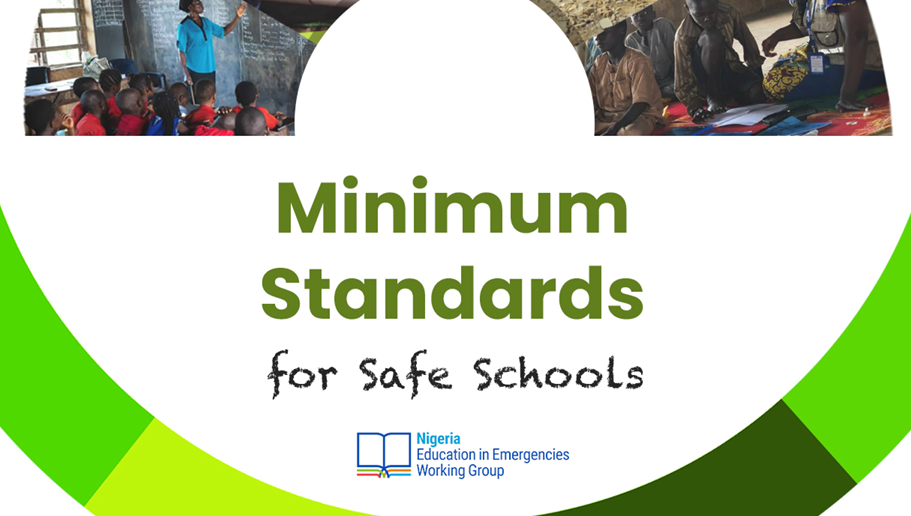
The Federal Ministry of Education Minimum Standards for Safe Schools in Nigeria outline the essential conditions that schools must meet to protect learners and staff from harm. These standards address various safety concerns, including violence against children, natural hazards, conflict, everyday hazards and safe school infrastructure. They provide a framework for schools to assess their safety practices, implement preventive measures and respond effectively to emergencies. The standards aim to create a safe and conducive learning environment for all learners.
Training Guide for Facilitators and Focal Points on the Minimum Standards for Safe Schools
This comprehensive guide helps everyone involved in education to create safer learning environments for learners in Nigeria. It explains the importance of school safety and provides practical advice on how to identify risks, develop safety plans, and implement measures to keep schools secure. The guide also encourages regularly reviewing and improving these practices. It is designed for a wide audience, including school leaders, teachers, parents, community members, government officials and NGOs. Interactive training methods are used to make learning engaging and effective. This includes informative talks to provide essential knowledge, group discussions to encourage collaboration and problem-solving and role-playing to practise responses to different scenarios. Real-life case studies and hands-on activities allow participants to learn from past experiences and apply their skills in realistic settings. By following this guidance, everyone can contribute to making schools in Nigeria safer and more secure for all learners.
National School Safeguarding Referral Pathway
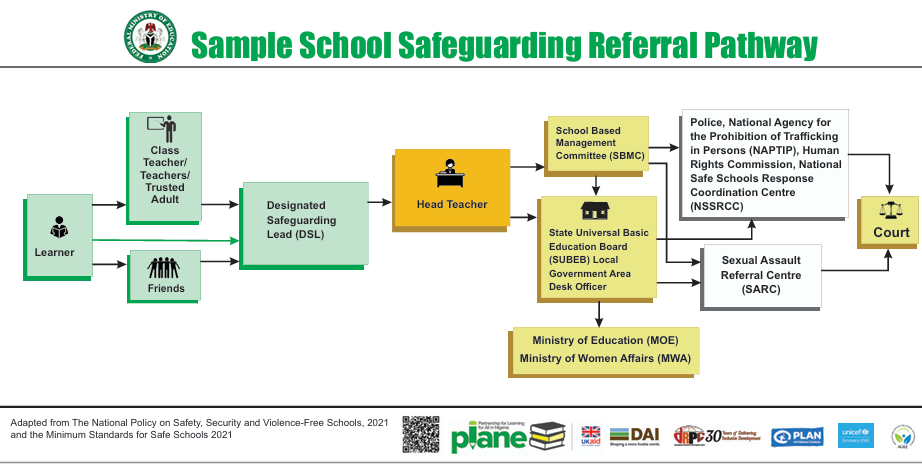
The National School Safeguarding Referral Pathway is a system designed to ensure that concerns about learners’ safety in Nigerian schools are reported, assessed and addressed effectively. It outlines the steps to take when a child protection concern arises, including who to contact, how to report the concern and what actions should follow. The pathway aims to create a safe and supportive environment for all learners in schools and learning centres, ensuring their well-being is protected. The National Policy on Safety, Security and Violence-Free Schools (NPSSVFS) encourages states to establish appropriate reporting and referral mechanisms using national guidelines. This strengthens the capacity of State Ministries of Education and agencies to respond effectively and promptly to Violence Against Children (VAC).
National School Safeguarding Action Plan
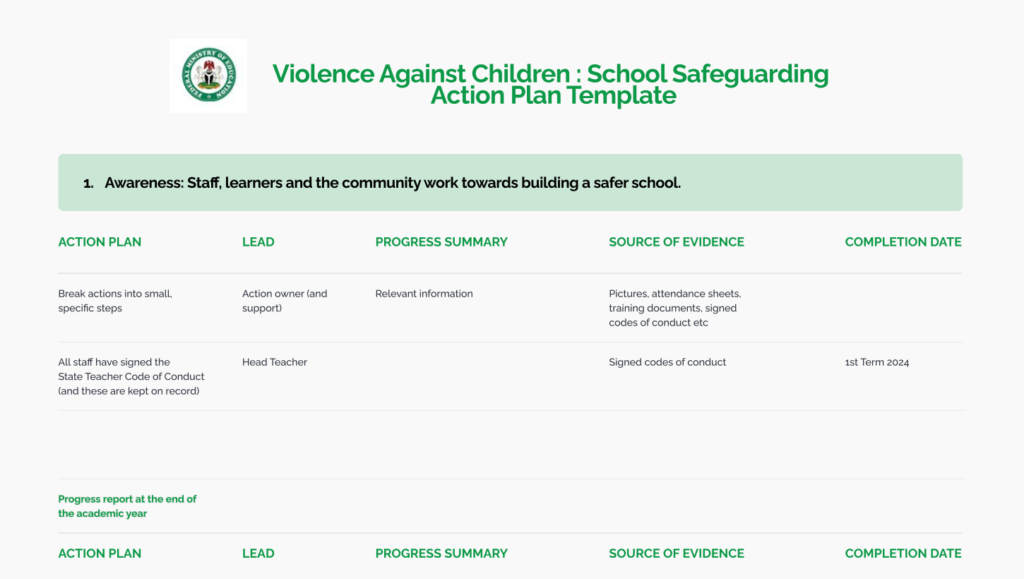
The National School Safeguarding Action Plan is a comprehensive roadmap outlining the strategies, initiatives, and resources needed to implement the School Safeguarding Referral Pathway and School Safeguarding Guideline effectively.
A Guide on Professional Standards for School Leadership in Nigeria
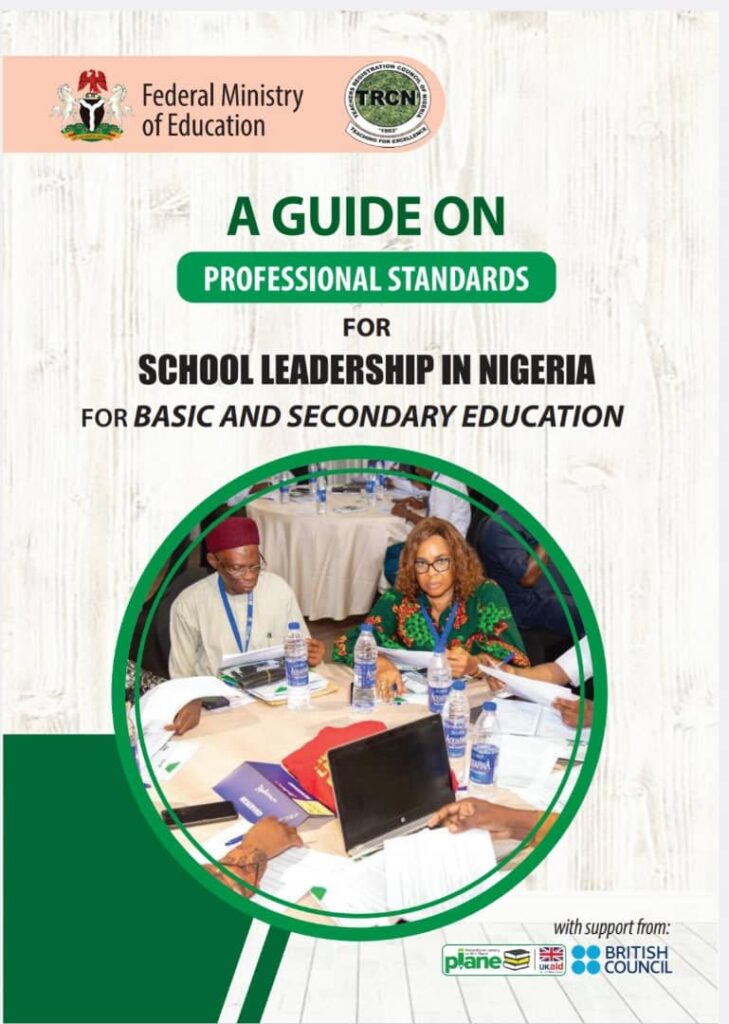
The guide is designed to help school leaders, and others in the educational community working with school leaders to use the standards in a consistent, confidential and supportive way. It provides background information, offers examples of how the standards can be used, and has a glossary to explain particular terms, some tools to assist the practical use of standards and some case studies. The case studies are designed to illustrate how the standards might be used in practice. It should be read prior to using the standards and referred to as and when required. The quality of school leadership has a significant impact on the quality of education learners receive. School leaders, therefore, are key contributors to improve the life chances of all learners across Nigeria.
Professional Standards for School Leadership in Nigeria
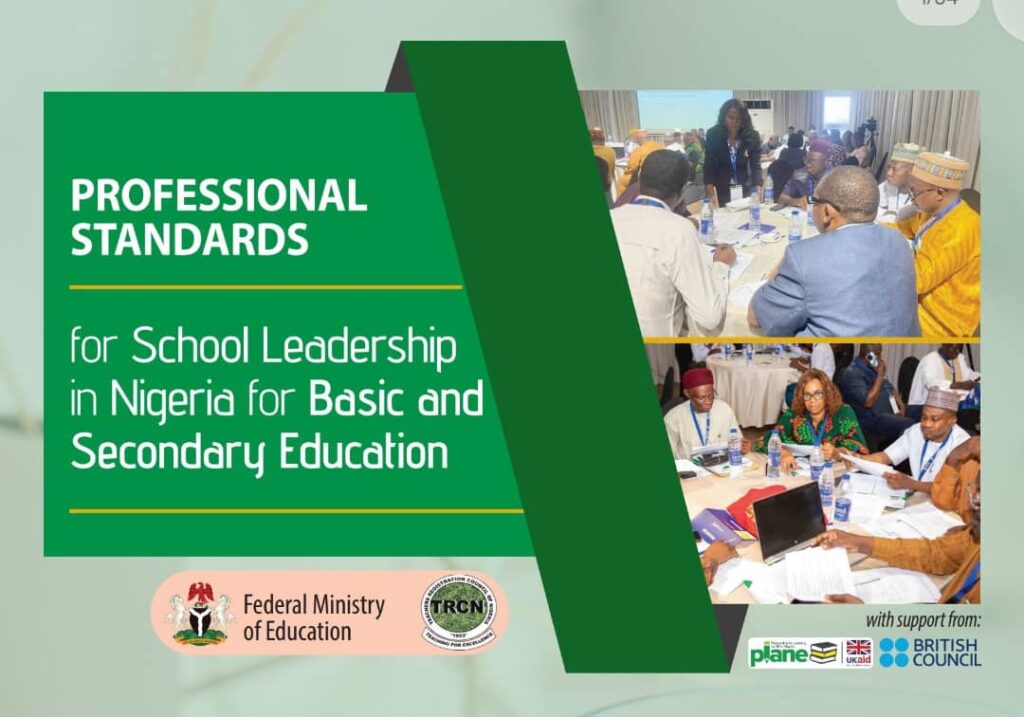
The Professional Standards is a reference document designed to support school leaders in their day-to-day work. These standards aim to promote excellence in school leadership and improve student learning outcomes. It can be used, for example, to support the planning of working practices, to monitor and review performance and to identify professional developmental needs. It is generic and apply to all school leaders, irrespective of type of school, its size or location, as well as those leaders working in centres. The standards are organized around five (5) domains which are: promoting school improvement and innovation; leading teaching and learning; developing self and others; leading and managing the school; and engaging and working with the community. Each domain consists of a number of individual standards. The knowledge, understanding and skills required to demonstrate each standards are also identified. Each Professional Standard within each of the five domains specifies the leadership and management behaviour that is expected at the four levels (Beginner, Proficient, Mentor & Distinguished)
Child Protection

Did you know that photos you share online can be traced to your location? What you post can tell someone a lot about you – from what…
Cyber Crime
The resource tips will help you clearly understand cybersecurity and some best practices that keep you safe while browsing.