
Introduction to Business Studies
Explain the meaning of Business Studies
State the importance of Business Studies
Identify the components of Business Studies
List career/ employment Opportunities in Business Studies
Introduction to Business Studies

Explain the meaning of Business Studies
State the importance of Business Studies
Identify the components of Business Studies
List career/ employment Opportunities in Business Studies
Maintenance of Tools and Machines

Explain the meaning of maintenance;
Identify different types of maintenance practices
Explain why tools and machines need regular maintenance;
Maintain and care for workshop tools and machines
Metal Work Hand Tools

Identify the different hand tools used for metalwork
Describe the hand tools;
Draw sketches of the different hand tools; and
Use the hand tools in metal work
Care and maintain metal work hand tools.
Woodwork Hand Tools

Identify woodwork:
– Measuring tools
– Setting and marking out tools
– Driving tools
– Boring tools
– work holding devices
– Cutting and paring tools
Describe the woodwork hand tools;
Use and sketch the hand tools;
Care and maintain woodwork hand tools.
Freehand Sketching

Students should be able to make neat freehand sketches of lines, curves and irregular shapes
Board Practice

Fix drawing sheet to the board
Sharpen pencils to conical point and knife edge
Draw border, horizontal and vertical lines
Place and draw the title block.
Write freehand legible letters and numerals.
Drawing Instruments and Materials

Identify, drawing instruments and materials
Demonstrate correct techniques for handling drawing instruments and materials
Construct shapes with drawing instruments and materials
Care for drawing instruments and materials
Building Materials
Identify various types of building materials in their locality
Mention uses of building materials
Workshop Safety
State causes of workshop accidents
List types of accidents that occur in workshop places
State workshop safety rules and regulations
Identify some workshop accidents preventive measures
Science and development

Explain gravitation, weightlessness, satellite, and space travel;
State the effects of gravitation
Identify the components of the solar system and explain the rotation and revolution of the earth and the moon
Illustrate the eclipse of the sun and the moon.
Explain the seasons of the year
Forces (I)
Explain the meaning of force;
Identify contact and non-contact forces;
Differentiate between magnetic and gravitational forces;
Measure and calculate gravitational force (GF) when mass and height are provided
Describe how to set up a balanced force
Explain the meaning of friction, its uses, advantages and disadvantages
Forces (I)

Explain the meaning of force;
Identify contact and non-contact forces;
Differentiate between magnetic and gravitational forces;
Measure and calculate gravitational force (GF) when mass and height are provided
Describe how to set up a balanced force
Explain the meaning of friction, its uses, advantages and disadvantages
Renewable and Non-Renewable Energy
Explain the meanings of renewable and non-renewable energy
Give examples of renewable and Non-renewable energy
State the implications of misuse of nonrenewable energy
Describe how energy generation affects quality of life
Energy
Explain the meaning of energy
State and describe the sources of energy
Name forms of energy;
Explain how energy is transformed from one form to another
State the uses of energy
Energy
Explain the meaning of energy
State and describe the sources of energy
Name forms of energy;
Explain how energy is transformed from one form to another
State the uses of energy
Living and Non – Living Things

Recognize that all living and nonliving things are made up of matter
List the three states of matter
Collect and identify samples of living and nonliving things in their environment
List the distinguishing characteristics of living and nonliving things
State the importance of plants and animals to human beings
Collect samples of some living and non-living things, sort out the materials and explain the uses
Living and Non – Living Things
Recognize that all living and nonliving things are made up of matter
List the three states of matter
Collect and identify samples of living and nonliving things in their environment
List the distinguishing characteristics of living and nonliving things
State the importance of plants and animals to human beings
Collect samples of some living and non-living things, sort out the materials and explain the uses
Environmental Pollution
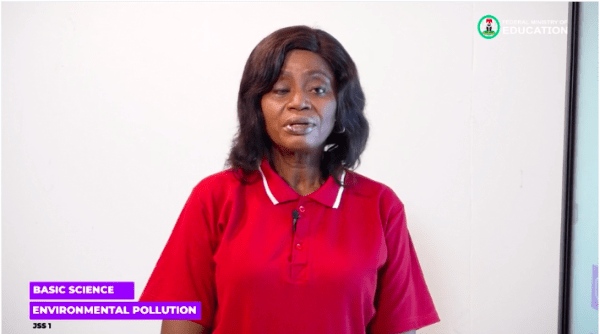
Define air, soil and water pollution
Identify various pollutants and their effects
List various causes of pollution
Mention ways of reducing the risk of pollution
Describe pollution control
Environmental Pollution

Define air, soil and water pollution
Identify various pollutants and their effects
List various causes of pollution
Mention ways of reducing the risk of pollution
Describe pollution control