
The seven core freedom of UDHR

Students should able to:
Explain the meaning seven core freedoms UDHR;
Mention the seven core freedoms of UDHR.
Brief history background of UDHR

Students should be able to:
Explain the meaning of UDHR;
Give the brief historical background of UDHR
The major pillars of democracy

Students should be ‘able to:
Define and explain the constitution; discuss the strong
Discuss the strong institutions like ~he three Arms of government;
Define and explain Federalism, state and local government;
Outline citizens responsibilities;
Political parties and free press.
The major pillars of democracy

Students should be ‘able to:
Define and explain the constitution; discuss the strong
Discuss the strong institutions like ~he three Arms of government;
Define and explain Federalism, state and local government;
Outline citizens responsibilities;
Political parties and free press.
Youth empowerment
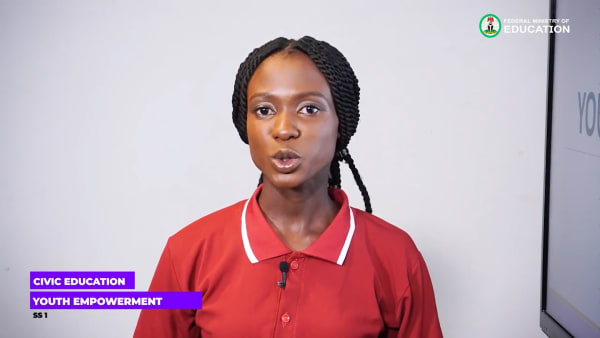
Students should be able to:
Explain the concept of empowerment.
State the different youth empowerment skills
list the importance and benefits of the different skills.
Practice a specific skill.
Hiv/ aids

Students should be able to explain the meaning and the causes of HIV/AIDS;
Identify the symptoms and effects of HIV/AIDS;
State the preventive measures of HIV/AIDS;
Discuss the HIV/AIDS stigmatization.
Values

Students should be able to :
Define and identify types of values;
Explain justice and selflessness;
Demonstrate incidences of selfless activities
Elections and Electoral Bodies in Nigeria.
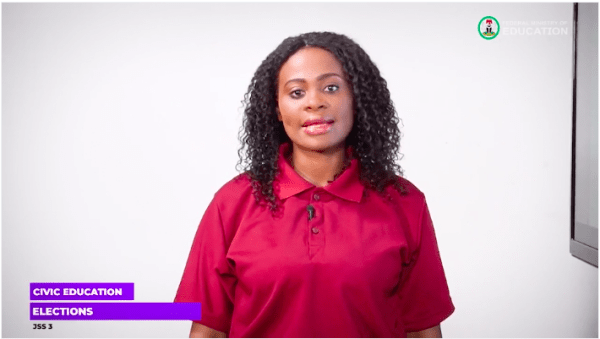
State the meaning of and importance of elections;
Identify the electoral bodies in Nigeria;
State the need for free and fair elections in Nigeria;
Elections and Electoral Bodies in Nigeria.

State the meaning of and importance of elections;
Identify the electoral bodies in Nigeria;
State the need for free and fair elections in Nigeria;
History and nature of operation research

Define operations research
Give the history and nature of operations research
Vectors in two dimension

State the difference between vectors and scalars
Perform simple operations on vectors
Determine the sum, difference of any combination of vectors lying in a plane
Resolve a vector in a given direction
Define the scalar (dot) product and its application
Vectors in two dimension

State the difference between vectors and scalars
Perform simple operations on vectors
Determine the sum, difference of any combination of vectors lying in a plane
Resolve a vector in a given direction
Define the scalar (dot) product and its application
Measures of location

Students should be able to :
Determine the measures of location of data
The straight line (i)

Determine the mid-point of a line segment
Determine the gradient of a straight line
Determine the distance between two points
Determine the condition for parallelism and perpendicularity
Determine the equation of a line in different forms
Transform non-linear relationships into linear forms
Determine the areas of triangles and quadrilaterals
Calculating and processing device

Identify and use some calculating devices
Work with number systems used in computers
Prepare flow charts
Solve problems using flow charts
Logical reasoning
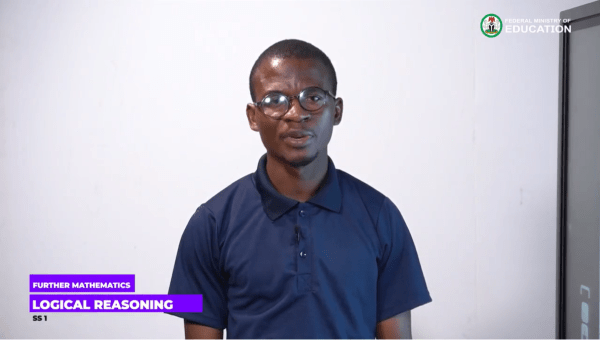
Recognize true and false statements
Give examples of negation and contrapositive of statements
Identify the antecedents of statements
Identify and write the conditional of statements
Logical reasoning

Recognize true and false statements
Give examples of negation and contrapositive of statements
Identify the antecedents of statements
Identify and write the conditional of statements
Trigonometry Ratios of Special Angles

Derive trigonometric ratios of special angles 30o,45o, 60o
Apply the trigonometric ratios of 30o, 45o, 60o to solve problems without the use of tables.
Logarithm
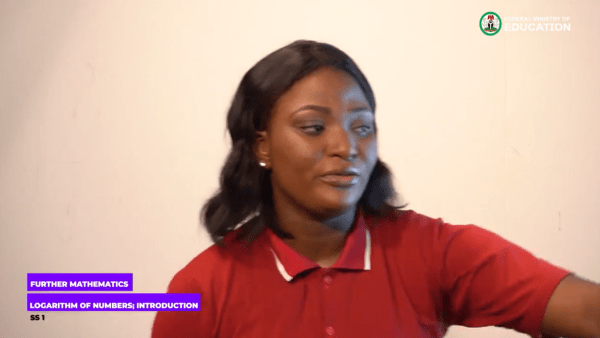
Use the laws of logarithms with a positive base in calculations
Change the base of a logarithm
Logarithm
Use the laws of logarithms with a positive base in calculations
Change the base of a logarithm