
STEP

STEP (Strengthening Teachers’ English Proficiency) is a comprehensive course designed to enhance the English language skills of teachers, with a strong focus on classroom communication and effective teaching strategies. Offered as a trainer-supported or self-study programme, STEP equips educators with the tools they need to foster a positive learning environment and deliver high-quality instruction in English. The course focuses on essential classroom English skills, including giving clear instructions, managing classroom interactions, and explaining concepts effectively. In addition to language development, it introduces practical teaching methodologies that encourage student engagement and improve learning outcomes. STEP is suitable for teachers across diverse educational settings—from primary to secondary schools—and is especially valuable for those seeking to improve both their English proficiency and pedagogical skills. Whether in urban or rural environments, participants benefit from structured, flexible learning that supports continuous professional development. By the end of the course, teachers will be better equipped to use English confidently and accurately in their classrooms, enhancing student understanding and contributing to improved educational quality. STEP helps teachers become more effective communicators, reflective practitioners, and professional role models who can positively impact learners’ academic journeys.
STRIDE
Digital Literacy for Educators is a practical course designed to equip pre-service and in-service teachers in Nigerian Colleges of Education with essential ICT skills for effective instructional delivery. In response to the increasing integration of digital technologies in education, this course strengthens teachers’ capacity to use digital tools and platforms— particularly in low-resource contexts. It covers basic technology skills such as word processing, creating slideshows, searching online, and using spreadsheets, as well as strategies for online teaching, assessment, and learner engagement.Participants will learn how to plan and deliver live lessons using platforms like WhatsApp, explore synchronous and asynchronous teaching methods, promote gender-sensitive and inclusive practices, and track learner progress with parental involvement. The course encourages creativity, collaboration, and the development of digital teaching materials, fostering a culture of continuous professional learning. Ultimately, it prepares educators to confidently integrate technology into their teaching, in line with the National Policy on Education and the National Digital Literacy Framework
Minimum Standards for Safe Schools
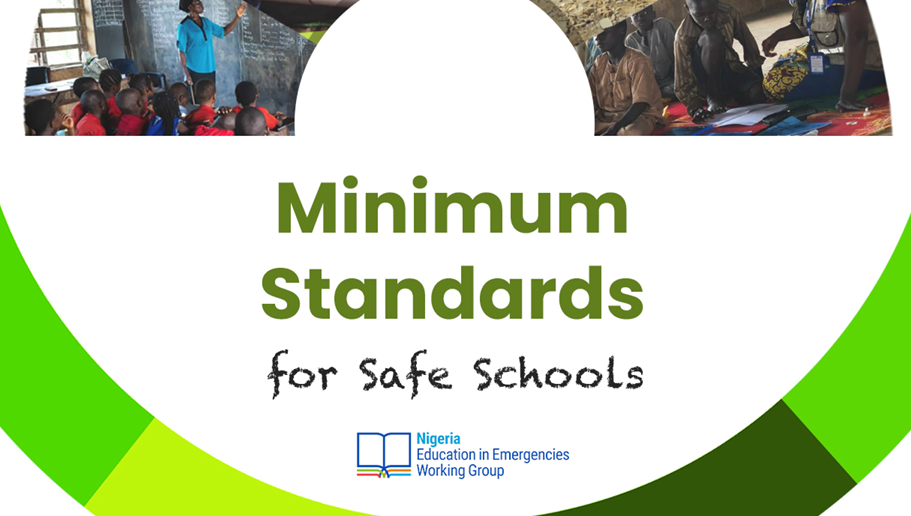
The Federal Ministry of Education Minimum Standards for Safe Schools in Nigeria outline the essential conditions that schools must meet to protect learners and staff from harm. These standards address various safety concerns, including violence against children, natural hazards, conflict, everyday hazards and safe school infrastructure. They provide a framework for schools to assess their safety practices, implement preventive measures and respond effectively to emergencies. The standards aim to create a safe and conducive learning environment for all learners.
Training Guide for Facilitators and Focal Points on the Minimum Standards for Safe Schools
This comprehensive guide helps everyone involved in education to create safer learning environments for learners in Nigeria. It explains the importance of school safety and provides practical advice on how to identify risks, develop safety plans, and implement measures to keep schools secure. The guide also encourages regularly reviewing and improving these practices. It is designed for a wide audience, including school leaders, teachers, parents, community members, government officials and NGOs. Interactive training methods are used to make learning engaging and effective. This includes informative talks to provide essential knowledge, group discussions to encourage collaboration and problem-solving and role-playing to practise responses to different scenarios. Real-life case studies and hands-on activities allow participants to learn from past experiences and apply their skills in realistic settings. By following this guidance, everyone can contribute to making schools in Nigeria safer and more secure for all learners.
Ede: Isori oro

Akekoo yoo le:
Daruko awon isoro oro yorùba;
Toka si isori kookan ninu gbolohun.
So ise ti okookan n se ninu gbolohun
Asa: Isomoloruko
Asa: Isomoloruko
Ìhun Ọ̀rọ̀ Àti Ìṣẹ̀dá Ọ̀rọ̀
Ìhun Ọ̀rọ̀ Àti Ìṣẹ̀dá Ọ̀rọ̀
Ìgbéyàwo Ayé Àtijọ
Ìgbéyàwo Ayé Àtijọ
Ẹ̀kọ́ Ilé
Ẹ̀kọ́ Ilé
Ìhun Ọ̀rọ̀ Àti Ìṣẹ̀dá Ọ̀rọ
Ìhun Ọ̀rọ̀ Àti Ìṣẹ̀dá Ọ̀rọ
Oyún Níní Àti Ìtọ́jú Oyún
Oyún Níní Àti Ìtọ́jú Oyún
Silebu 1
Silebu
Awon Aya Ara Ifo
Awon Aya Ara Ifo
Ise Abinibi
Ise Abinibi
Awon Ounje Ile Yoruba i
Awon Ounje Ile Yoruba
Awon Ounje Ile Yoruba Ii
Awon Ounje Ile Yoruba
Ìgbéyàwo Ayé Àtijọ
Ìgbéyàwo Ayé Àtijọ
Owo sise
Akekoo yoo le:
So ohun ti owo sise je.
Salaye ipa ti owo sise ko ninu oro aje yorùba.
Salaye nipa orisiirisii owo ni ile yorùba
So bi a se le din arósese ku lode oni tabi ki a dekun re nipase owo sise.
Akaye
Akaye
Ìgbéyàwo Òde Òni
Ìgbéyàwo Òde Òni