
Properties of Families of Elements: Periodic Table
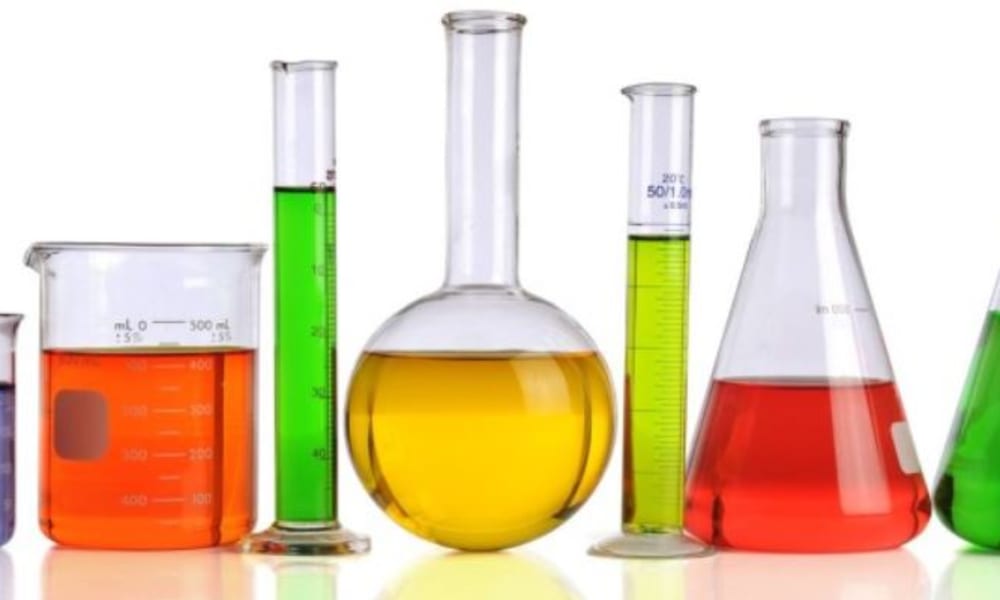
Understanding the Properties of families of Elements: Periodic Table – The Chemical World
Acid-Base Reactions
-Define concentration, in mol dm-3 of solutions.
-Define standard solutions.
-Explain the relationship between concentrations and volume of reacting substances mathematically express the relationship between the concentration in mol dm-3 and volume of a solution
-Carry out acid-base titrations using appropriate indicators
-Record correctly titre values to two decimal places
-Carry out relevant calculations from titration results.
Mass, Volume Relationships: Stoichiometry
– Explain the concept of the mole, molar, s.t.p.; Relative densities and relative molar mass (RMM)
-Solve problems involving reacting masses and volumes in chemical reactions.
-State the SI units of various basic quantities.
Chemical Reactions
Identifying reactants and products of any chemical reaction
Explaining the terms reaction time and reaction rate; and the relationship between the two.
Explaining collision theory with respect to reaction time and reaction rate
Describing the influence of the following on chemical reaction rates:
– nature of substances;
– concentration/pressure,
– temperature and catalysts
Endothermic and exothermic reactions
Equations for simple equilibrium reaction
Le Chateller’s principle
Influence of the following factors on the equilibrium of chemical reactions:
– Concentration
– Temperature
– Pressure
Periodic Table(i)
-The periodic law
-Arrangement of common elements into groups (families) and periods
-Distinguishing between the families of elements on the periodic table
-The changes in the properties of elements down the group and across periods
-The relationship between ionization energy and electron affinity and the properties of elements down the groups and across periods
-The diagonal relationship in the properties of elements
Periodic Table 3
At the end of this lesson, the students should be able to understand Periodic Table
Periodic Table 4
At the end of this lesson, the students should be able to understand Periodic Table
Periodic Table: Alkali Earth Metals Calcium
At the end of this lesson, the students should be able to understand Alkali Earth Metals: Calcium
Periodic Table: Alkali Metals
At the end of this lesson, the students should be able to understand Alkali Metals
Periodic Table Ionization Energy
At the end of this lesson, the students should be able to understand Periodic Table Ionization Energy
Periodic Table Group Iii Element
At the end of this lesson, the students should be able to understand Periodic Table Group
Water Structure: Physical And Chemical Properties
At the end of this lesson, the students should be able to understand the Physical And Chemical Properties of water.
Water Solubility Concept
At the end of this lesson, the students should be able to understand Water Solubility Concept
Water Structure: Chemical Properties
At the end of this lesson, the students should be able to understand the Chemical Properties Water Structure
Sulphides 1
At the end of this lesson, the students should be able to understand Sulphides
Electrolysis vi
At the end of this lesson, the students should be able to understand Electrolysis
Alkynes And Benzene: Hydrocarbons
At the end of the lesson, the student should be able to understand Alkynes And Benzene: Hydrocarbons
Energy Changes Of Chemical Reactions; Enthalpy (I)
At the end of the lesson, the student should be able to understand Energy Changes Of Chemical Reactions; Enthalpy (I)
Non-Metals & Their Compounds
At the end of the lesson, the student should be able to understand Non-Metals & Their Compounds
Volumetric Analysis: Acid-Base Reactions
Define concentration, in mol dm-3 of solutions.
-Define standard solutions.
-Explain the relationship between concentrations and volume of reacting substances mathematically express the relationship between the concentration in mol dm-3 and volume of a solution
-Carry out acid-base titrations using appropriate indicators
-Record correctly titre values to two decimal places
-Carry out relevant calculations from titration results.