
Chemical Combination 3
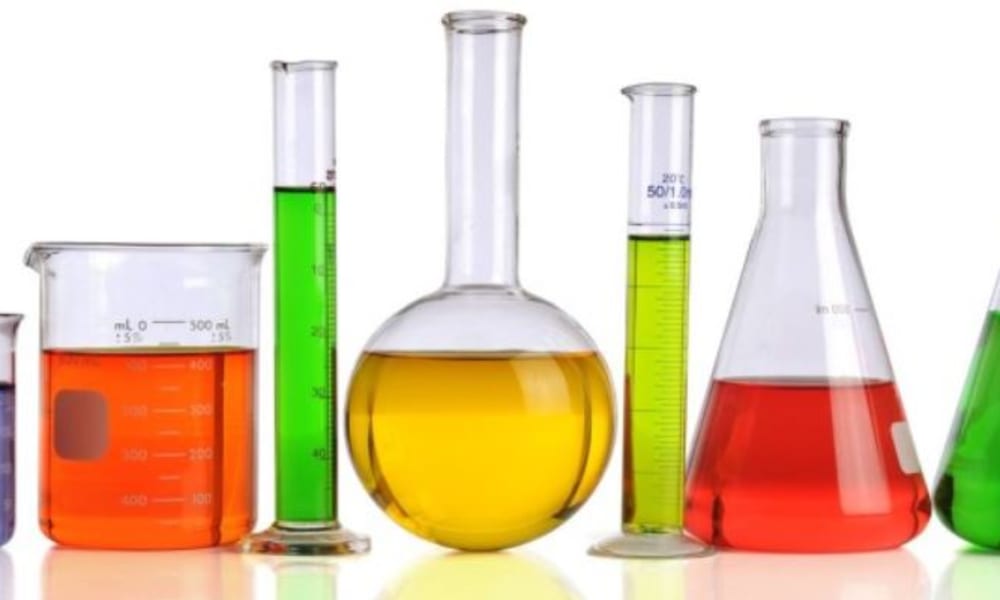
At the end of this lesson, the students should be able to understand Chemical Combination
Gas Law: Charles Law 2
At the end of this lesson, the students should be able to understand Charles Law
Gas Law:Charles Law
At the end of this lesson, the students should be able to understand Charles Law
Gas Law: Dalton Law
At the end of this lesson, the students should be able to understand Dalton Law
Isotopy
At the end of this lesson, the students should be able to understand Isotopy
Ideal Gas Equation
At the end of this lesson, the students should be able to understand Ideal Gas Equation
Rare Gas Configuration
At the end of this lesson, the students should be able to understand Rare Gas Configuration
Acid And Bases
At the end of this lesson, the students should be able to understand Acid And Bases
Calculation From Chemical Equation
At the end of this lesson, the students should be able to understand the Calculation From Chemical Equation
Law Of Conservation Of Mass
At the end of this lesson, the students should be able to understand the Law Of Conservation Of Mass
Drying Agents & Dehydrating Agents
At the end of this lesson, the students should be able to understand Drying Agents & Dehydrating Agents
Salts And Buffer Solutions
At the end of this lesson, the students should be able to understand Salts And Buffer Solutions
Gas Laws:ii
-Demonstrate diffusion of gases;
-State the relationship between the rate of diffusion and density of gas/vapour;
-Show how heat affects the volume of a given mass of gas;
-Explain the Kelvin Scale of temperature and its relationship to the Celsius Scale;
-Explain the effect of pressure on the volume of a gas;
Explain the effect of temperature and pressure on a given volume of gas;
Show that PV = nRT is the general gas equation.
Symbols, Formulae and Equations: Empirical and Molecular formula and balancing of chemical equation
-State the symbols of the first 20 elements and other common elements;
-Distinguish between elements, compounds and mixtures
-Write chemical formula and chemical equations
Calculate between the empirical and molecular formulae of compounD
-Illustrate that matter is neither created nor destroyed
-State and illustrate the laws of constant composition and multiple proportions
Symbols, Formulae and Equations: Elements, compounds and mixtures (II)
-State the symbols of the first 20 elements and other common elements;
-Distinguish between elements, compounds and mixtures
-Write chemical formula and chemical equations
Calculate between the empirical and molecular formulae of compounD
-Illustrate that matter is neither created nor destroyed
-State and illustrate the laws of constant composition and multiple proportions
Symbols, Formulae and Equations: Elements, compounds and mixtures (I)
-State the symbols of the first 20 elements and other common elements;
-Distinguish between elements, compounds and mixtures
-Write chemical formula and chemical equations
Calculate between the empirical and molecular formulae of compounD
-Illustrate that matter is neither created nor destroyed
-State and illustrate the laws of constant composition and multiple proportions
Gas Laws
-Demonstrate diffusion of gases;
-State the relationship between the rate of diffusion and density of gas/vapour;
-Show how heat affects the volume of a given mass of gas;
-Explain the Kelvin Scale of temperature and its relationship to the Celsius Scale;
-Explain the effect of pressure on the volume of a gas;
Explain the effect of temperature and pressure on a given volume of gas;
Show that PV = nRT is the general gas equation.
Chemical Combination
Identify the first twenty elements of the periodic table;
Write the electronic configuration of atoms of the first 20 elements;
Explain the concept. of atomic numbers;
Arrange the elements on the periodic table based on their atomic numbers;
Differentiate between various types of chemical bonding;
Name compounds by their conventional and IUPAC names;
Distinguish between solid, liquid and gaseous states of matter;
Discuss the kinetic theory and its applications
Symbols, Formulae and Equations
-State the symbols of the first 20 elements and other common elements;
-Distinguish between elements, compounds and mixtures
-Write chemical formula and chemical equations
Calculate between the empirical and molecular formulae of compounD
-Illustrate that matter is neither created nor destroyed
-State and illustrate the laws of constant composition and multiple proportions
Particulate Nature of Matter
-Distinguish between physical and chemical changes;
-Distinguish between atoms and molecules;
-Describe how the particles are arranged in the atom;
Define Atomic number
-Mass number
– Isotopes;
-Calculate the relative atomic masses of atoms.