
Jesus the Light of the world

Student should be able to: recognise Jesus as the light of the world;
Indicate the consequences of walking in darkness; discuss the different functions of ligllt;
Identify some social vices as walking in darkness
Jesus as the lamb, the door and good shepherd
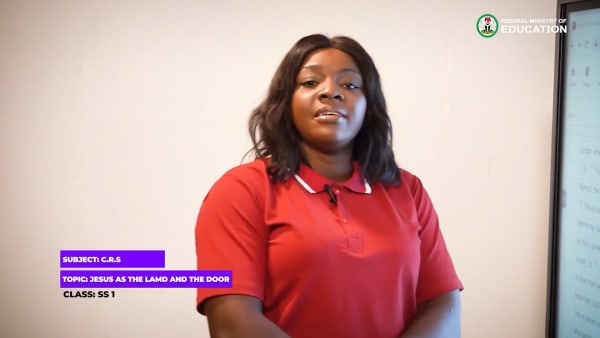
Student should be able to:l.identify Jesus asthe Lamb, the Door and the Good Shepherd;
Discuss the qualities of a Good Shepherd;
Explain the significance of Jesus as the Lamb, the Door and the Good Shepherd
Relate the significance of each term to their life experiences.
Types of service and table laying

Explain five types of food service.
Serve various dishes using different methods.
Explain two types of covers.
Lay tables for different menus.
Food and beverage service personnel

Mention the various personnel in the food and beverage area.
Outline the duties of the food and beverage personnel
Study of food methods and principles of cooking methods

Identify nineteen food commodities and their uses in the catering industry.
Explain various methods of cooking foods.
Prepare the various food commodities by applying the different methods of cooking.
Measure using local and standard equipment.
Safety procedures in catering

Stating types and causes of accidents in the kitchen.
Explaining accidents prevention and remedy of accidents in the kitchen.
Listing contents of fist aid box and their uses.
Stating the importance of fire fighting equipments.
Culinary terms

Define culinary terms.
Translate basic culinary terms to English and vice versa.
Hospitality industry/Catering

Define hospitality industry.
State the relationship between the hospitality industry and catering trade.
State the reasons for housekeeping department.
Explain the duties and responsibilities of a receptionist.
The effects of the Atlantic slave trade.

Identify and discuss the consequences and impact of the Atlantic slave trade
Organisation of the slave trade.

Describe the organisation of the slave trade in West Africa.
Identify the items of exchange for the slaves.
Trans-Atlantic Slave Trade Origin of the Atlantic Slave Trade

Explain the circumstances which led to the demand for slaves in Europe and the New World.
Describe the circumstances which led to the introduction of slave trade in West Africa.
Early European Contacts with the Coastal States.

Identify the reasons for European activities.
Identify the articles of trade and early commercial relations between Nigerian peoples and Europeans.
Asses the impact of European contact on coastal peoples of Nigeria.
Islam in Hausa land
Discuss the introduction and spread of Islam in Hausaland.
Describe the conflicts which developed between Islam and local religious practices.
Discuss the impact of Islam on society and state in Hausa land.
Early external influences: a) Contact with North African Trade and Islam 1. The Trans Saharan Trade

Discuss the nature of the trade.
Describe the trade routes and items of trade.
Indigenous Technology, Crafts and Industries.

Mention the types of indigenous technology practiced in Nigeria.
Identify some areas where these indigenous technologies are practiced.
Inter-group relations a) Economic activities and Inter-group relations.

Describe the nature of commercial relations between Nigeria’s diverse peoples.
Access the impact of economic activity on inter-group relations.
Identify other types of inter-group relations.
Inter-group relations a) Economic activities and Inter-group relations.

Describe the nature of commercial relations between Nigeria’s diverse peoples.
Access the impact of economic activity on inter-group relations.
Identify other types of inter-group relations.
Non-Centralised States 1. Social Political Organization.

Identify the main features of the social and political organisation of the non-centralized polities of Nigeria.
Identify aspects of their socio-political institutions which cut across lineages and villages and so provide a unifying force despite the absence of centralized political system.
Explain the arrangements made for settling issues and disputes.
Discuss socio-political relations between these peoples and other groups.
Non-Centralised States 1. Social Political Organization.

Identify the main features of the social and political organisation of the non-centralized polities of Nigeria.
Identify aspects of their socio-political institutions which cut across lineages and villages and so provide a unifying force despite the absence of centralized political system.
Explain the arrangements made for settling issues and disputes.
Discuss socio-political relations between these peoples and other groups.
The Efik

Identify the factors which led to the rise of the Efik State.
Explain the socio-political organisation of the Efik.
Describe the economic activities of the Efik.
Discuss the impact of contact with Europe on the Efik.
Discuss the relations between the Efik and their hinterland neighbours.